Advice from the team
Laminate, LVT or carpet: which floor is best for a flat?
The short answer
For kitchens, bathrooms and hallways, LVT (luxury vinyl tile) is usually the best choice: it is waterproof, hard-wearing and quiet underfoot. Laminate looks similar and suits dry rooms, but most laminate does not like standing water. Carpet is the warmest and quietest for bedrooms, and many flat leases require carpet or an acoustic underlay to protect the neighbours below.
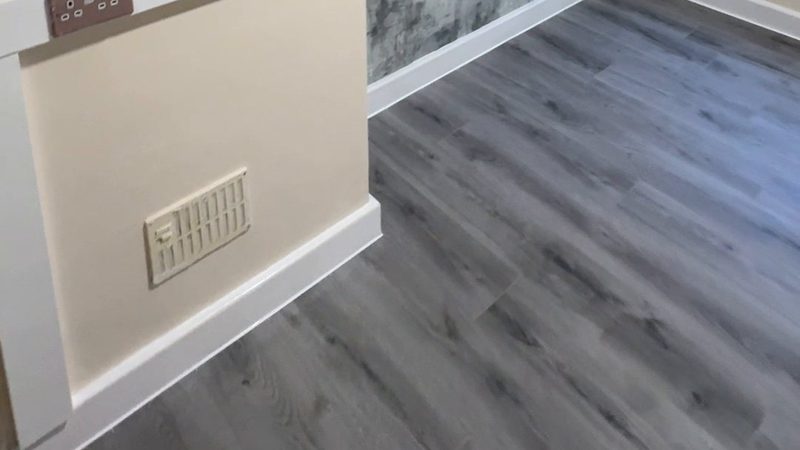
Choosing a floor for a flat is not only about looks. Water, noise and wear matter more than in a house, and the wrong choice can mean a floor that swells, or a complaint from the flat downstairs.
LVT: the all-rounder
Luxury vinyl tile, usually called LVT, is a layered vinyl floor printed to look like wood or stone. It comes as planks or tiles that are either glued down or clicked together.
- A waterproof surface, so it suits bathrooms, kitchens and hallways.
- Warmer and quieter underfoot than tiles or laminate.
- Hard-wearing and easy to clean, which is why it is popular in rentals and holiday lets.
- It needs a smooth, level subfloor: bumps underneath show through in time.
Laminate: good value for dry rooms
Laminate is a fibreboard core with a printed, hard-wearing top layer. It looks convincing and resists scratches, but standing water can make the core swell at the joints. Keep it to living rooms, bedrooms and dry hallways.
Carpet: warm and quiet
Carpet is still the most comfortable choice for bedrooms and the best at stopping footsteps travelling to the flat below. It is the wrong choice for kitchens and bathrooms, and in rentals it usually needs replacing sooner than a hard floor.
Check your lease first
Many leases say what floors are allowed in a flat: often carpet, or a hard floor laid over an approved acoustic underlay. Fitting a hard floor without one can lead to a dispute with the freeholder or the neighbours below. It takes five minutes to check the lease before you buy anything.
What we usually recommend
- Bathroom and kitchen: LVT.
- Hallway: LVT, because it takes the most wear and the wettest shoes.
- Living room: LVT or laminate, with a rug if the flat below hears footsteps.
- Bedrooms: carpet with a good underlay, or a hard floor if the lease allows it.
Questions we get asked
Can LVT go in a bathroom?
Yes. LVT is one of the best floors for a bathroom because water does not harm its surface. It has to be fitted tightly around the toilet and sealed at the edges, so water cannot get underneath.
Can a new floor go over the old one?
Sometimes. Old vinyl that is flat and well stuck can stay under some floors, but carpet always comes up, and an uneven subfloor has to be levelled first. A bad base is the main reason new floors fail early.
How long does it take to lay a new floor in a flat?
A single room is often a day’s work. A whole flat usually takes a few days, depending on levelling and how much furniture has to move.
See our flooring service, or send a photo of your room on WhatsApp for a free fixed quote.
More advice
· 2 min read
How can I make a bathroom safer for an older parent?
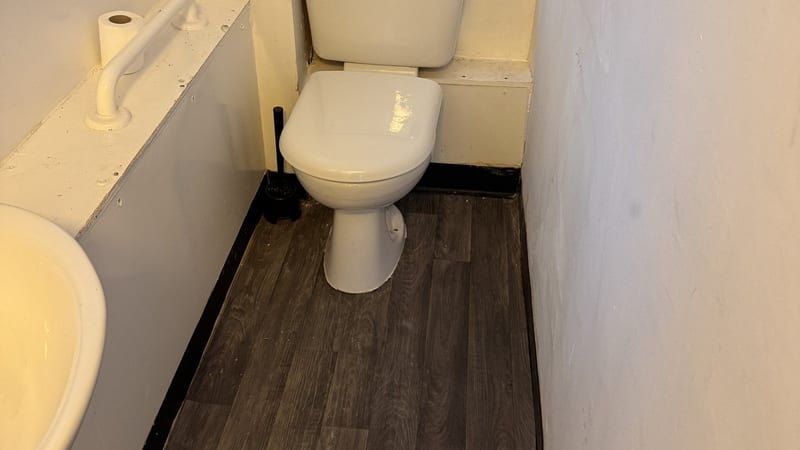
Start with the changes that prevent falls: grab rails by the toilet and in the shower, a non-slip floor, good lighting and a shower seat. If climbing into the bath is the problem, replacing it with a level-access or low-tray shower makes the biggest difference. Councils can help pay for some adaptations through a Disabled Facilities Grant, usually after an assessment by an occupational therapist.
Read the answer →
· 2 min read
Why is my laminate floor lifting or swelling?
Laminate lifts in a ridge when it has no room to expand, and it swells when water gets into its joints. The usual causes are a missing gap at the walls, spills or a leak, damp coming up from a concrete floor, or an uneven base. Boards that have only lifted can often be relaid; boards with swollen edges cannot be dried back and have to be replaced.
Read the answer →
· 2 min read
Why is my shower leaking through the ceiling below?
Most leaks from a shower into the room below come from four places: tired sealant where the tray meets the wall, cracked grout, a loose or failed waste under the tray, or the pipes and valve behind the wall. Stop using the shower, let the ceiling dry, and check the sealant and grout first: they are the most common cause and the simplest to put right.
Read the answer →