Advice from the team
Why is my shower leaking through the ceiling below?
The short answer
Most leaks from a shower into the room below come from four places: tired sealant where the tray meets the wall, cracked grout, a loose or failed waste under the tray, or the pipes and valve behind the wall. Stop using the shower, let the ceiling dry, and check the sealant and grout first: they are the most common cause and the simplest to put right.
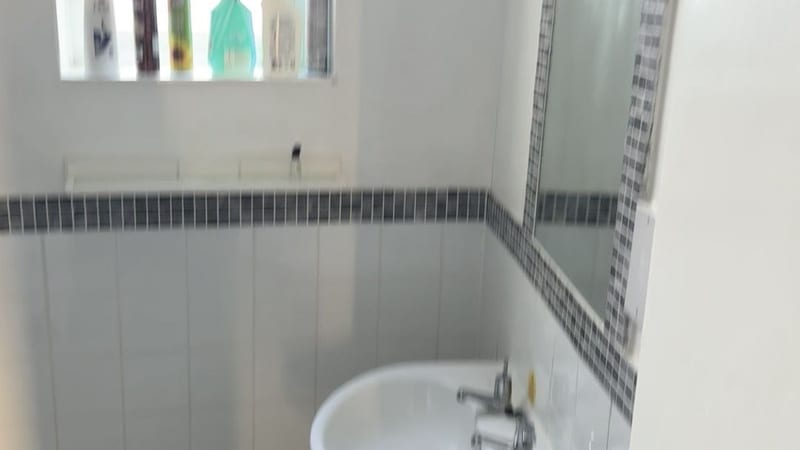
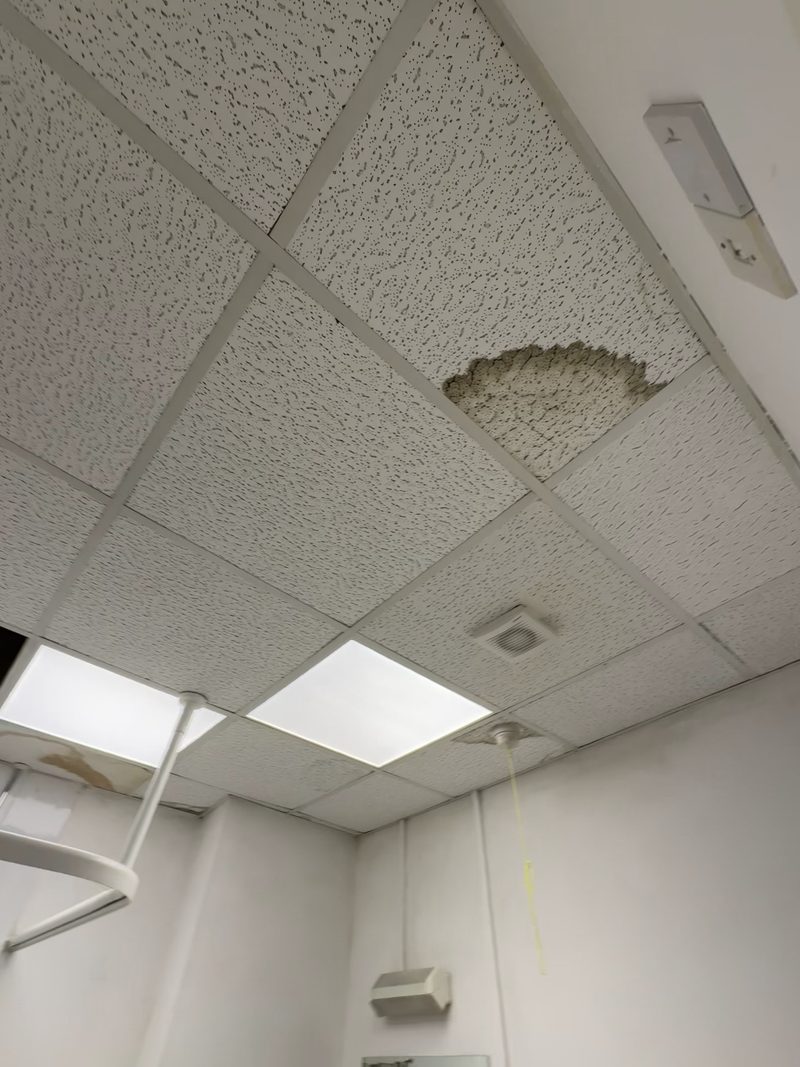
A brown ring on the ceiling under a bathroom is one of the jobs we are asked about most, often in flats where the bathroom sits above someone else’s living room. This is how to narrow down where the water comes from, in the order we check.
First, stop the damage
- Stop using the shower until the cause is found.
- If water is dripping near a light or a fitting, switch that circuit off at the fuse box and have it checked: for electrics we bring in a qualified engineer.
- If the ceiling is sagging or bulging, keep people out of the room below and put a bucket under it.
- In a flat, tell your neighbour below, and your landlord or managing agent if you rent.
1. The sealant around the tray
The silicone where the tray meets the wall gets soaked every time the shower runs. Once it splits, peels or comes away, water runs behind the tray and down. Black, cracked or loose sealant is the first suspect. It is cut out and renewed in a short visit, and the shower should then be left for about a day while it cures.
2. Grout and tiles
Cracked or missing grout lets water soak into the wall behind the tiles. If tiles sound hollow when you tap them, water may already be behind them. Regrouting works when the tiles are still firmly stuck; if they are not, the wall has to be put right first, and wall panels are often the quickest way to a sealed shower.
3. The tray and its waste
If the leak only shows after a long shower, or when water stands in the tray, look at the waste fitting under the tray or a crack in the tray itself. A tray that moves when you step on it can break its seal over time and needs to be bedded down properly.
4. The valve and the pipes behind the wall
A stain that keeps growing when nobody has showered points at the supply pipes or the shower valve. Finding it means opening the wall behind the shower, which is a plumber’s job.
A simple test you can do
- Hold the shower head low and run water only onto the tray floor for five minutes, then check the ceiling below. Water now points at the tray or its waste.
- Next day, spray only the walls and the corners. Water now points at the grout or the sealant.
- If the ceiling gets wetter with the shower off, the pipes or the valve are the likely cause.
After the leak is fixed
Let the ceiling dry out completely before it is repaired or painted, or the stain comes back. A stain-blocking primer under the new paint stops the brown mark showing through.
Questions we get asked
How quickly should a shower leak be fixed?
As soon as you can. Water behind tiles or under a tray keeps soaking plaster and floor timbers, and a small stain can turn into a damaged ceiling below.
Can you repair the ceiling as well?
Yes. Once the leak is fixed and the ceiling has dried, we repair the damaged plaster and repaint it. Send photos of the shower and of the ceiling for a free fixed quote.
Do you fix shower leaks near me?
We cover Eastbourne and about 20 km around it, from Seaford to Bexhill-on-Sea and Hailsham. See the areas we cover, or our bathrooms and plumbing service.
More advice
· 2 min read
How can I make a bathroom safer for an older parent?
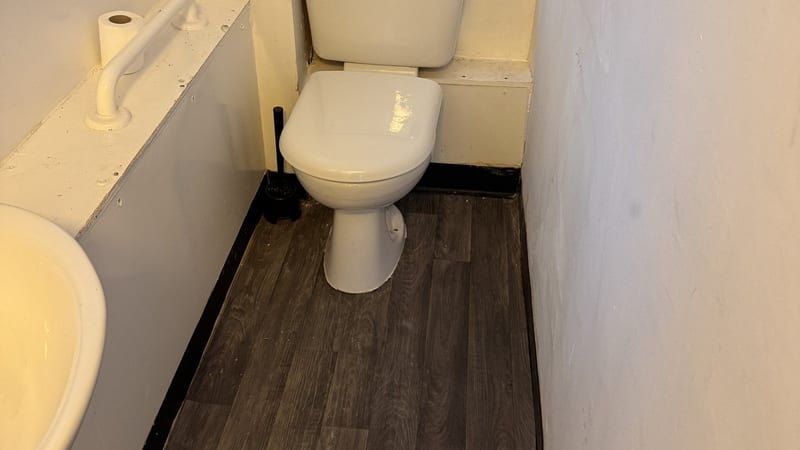
Start with the changes that prevent falls: grab rails by the toilet and in the shower, a non-slip floor, good lighting and a shower seat. If climbing into the bath is the problem, replacing it with a level-access or low-tray shower makes the biggest difference. Councils can help pay for some adaptations through a Disabled Facilities Grant, usually after an assessment by an occupational therapist.
Read the answer →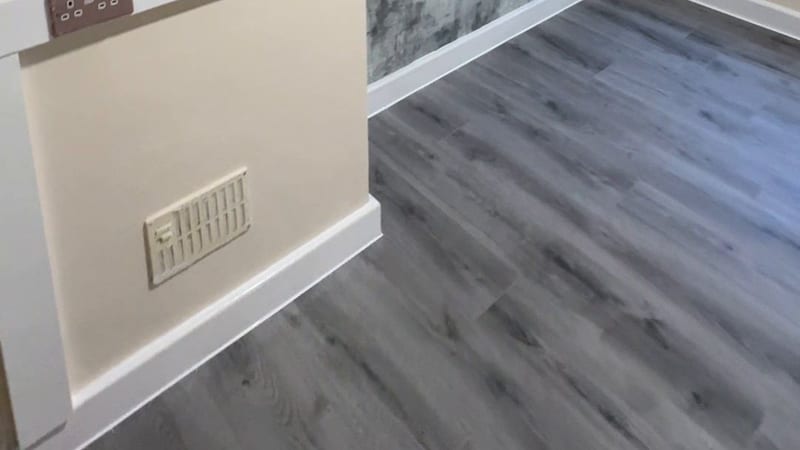
· 2 min read
Why is my laminate floor lifting or swelling?
Laminate lifts in a ridge when it has no room to expand, and it swells when water gets into its joints. The usual causes are a missing gap at the walls, spills or a leak, damp coming up from a concrete floor, or an uneven base. Boards that have only lifted can often be relaid; boards with swollen edges cannot be dried back and have to be replaced.
Read the answer →
· 2 min read
How do I get a holiday let ready for the new season?
Walk round the property in the quiet months as if you were a guest, and list everything that looks worn or does not work properly. Fix the faults first, then refresh what guests notice most: bathrooms, walls, floors and doors. Book the work between November and March so it is finished before Easter, and keep the safety checks up to date.
Read the answer →