Advice from the team
Shower wall panels or tiles: which is better for your bathroom?
The short answer
For most bathrooms, shower wall panels are the practical choice: there is no grout to clean or go mouldy, they go up in a day, and they can often be fitted over old tiles that are still firmly stuck. Tiles take longer and need more upkeep, but give you the widest choice of looks and last for decades when they are laid well.
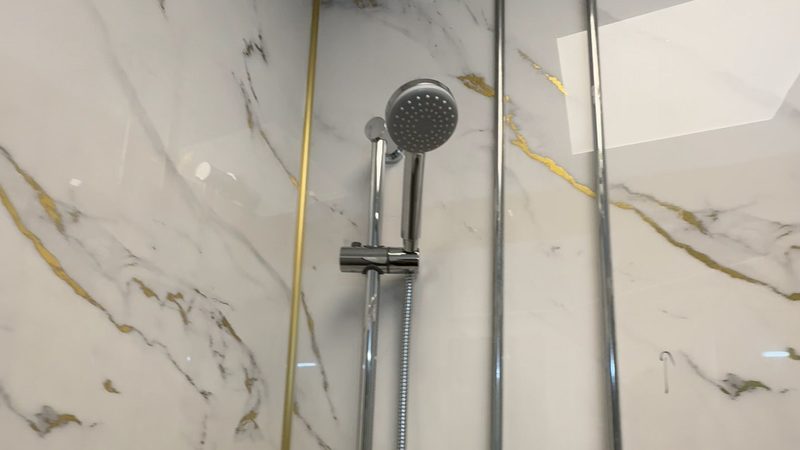
We fit both, so this is not a sales pitch for either. It is how we explain the choice to homeowners and landlords who send us a photo of a tired shower.
What are shower wall panels?
Shower wall panels are large waterproof boards, usually around a metre wide and the full height of the shower, bonded to the wall and sealed at the joints and edges. Most are PVC, acrylic or laminate, printed to look like marble, stone or tiles. Because each panel covers most of a wall, there are a handful of joints instead of hundreds of grout lines.
Why panels suit most homes
- No grout lines, so nothing to scrub and far fewer places for black mould to start.
- Quick to fit: a standard shower can usually be lined in a day, with no waiting for adhesive and grout to cure between stages.
- They can often go over existing tiles, which saves the mess and time of hacking them off.
- Easy to wipe clean, which matters in rentals and holiday lets that change hands often.
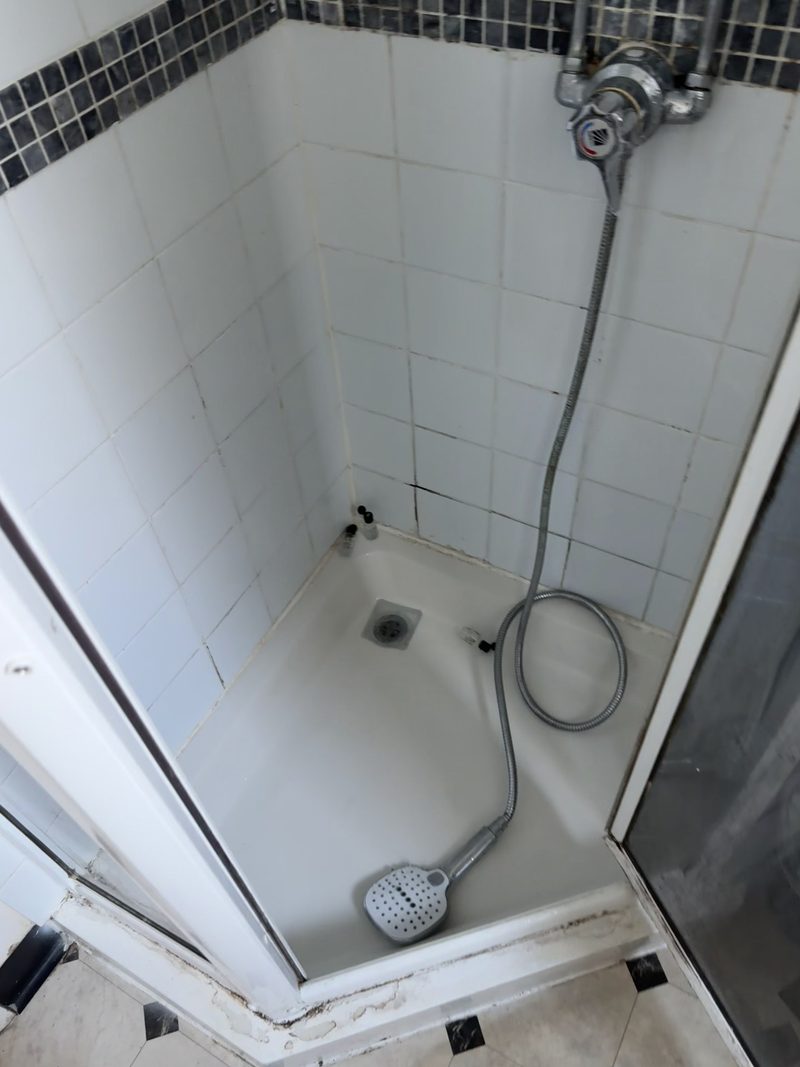
This shower in Eastbourne is a typical example: sound tiles, but stained grout that no amount of cleaning would fix. It was lined with marble-effect panels and gold trim, shown at the top of this page.
When tiles are still the better choice
- You want a particular look, such as mosaics, patterned tiles or real stone, that panels cannot copy convincingly.
- The shower is a walk-in or wet room with a tiled floor, where the walls and floor need to match and fall to a drain.
- The whole bathroom is being stripped back anyway, and a long life matters more than speed.
- The house is a period property where tiles suit its character.
Can panels go over old tiles?
Often, yes, but only when the tiles are firmly stuck and the wall behind them is sound and flat. A good fitter taps the tiles to find hollow or loose ones and looks for signs of water behind them: soft grout, lifting tiles or staining. Loose tiles and damp walls have to be put right first, or the problem is simply hidden behind a new surface.
How long do shower panels last?
Fitted properly, with every joint and edge sealed, good panels last for many years. The weak points are the silicone seals at the tray and in the corners. Check them once a year and replace them as soon as they split or go black: a small job that protects the wall behind.
Questions we get asked
Are shower panels cheaper than tiles?
The whole job usually costs less, mainly because panels are quicker to fit and often avoid stripping the old tiles. Panels themselves vary a lot in price, so get a fixed quote for your shower.
Do shower panels look cheap?
Not when they are chosen and fitted well. Modern marble and stone effects are convincing, and neat trims and straight, sealed joints make most of the difference.
Can I fit shower panels myself?
It is possible if you are handy, but the result depends on cutting accurately around the valve and sealing every joint. A leak behind a panel can go unnoticed for months, so many people prefer a fitter for this part.
Do you fit shower panels in Eastbourne?
Yes. The Home Fix N Go team fits shower panels and tiles in Eastbourne and up to 20 km around it. Send a photo of your shower on WhatsApp for a free fixed quote.
Not sure which suits your bathroom? See our bathrooms and plumbing service, or send us a photo and we will tell you what we would do.
More advice
· 2 min read
How can I make a bathroom safer for an older parent?
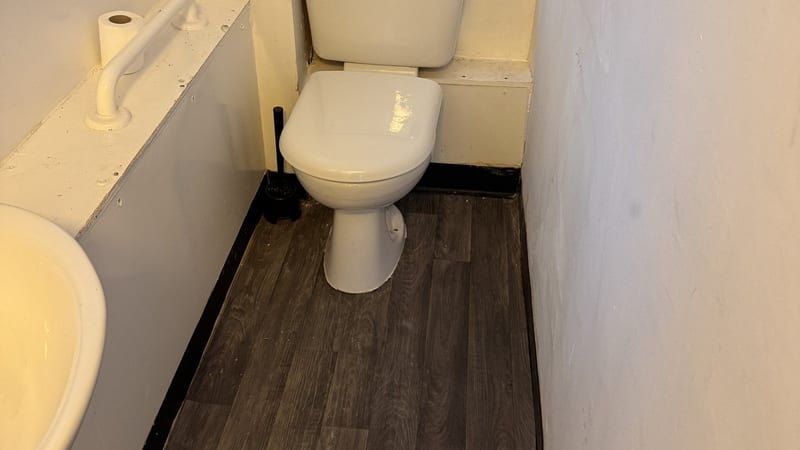
Start with the changes that prevent falls: grab rails by the toilet and in the shower, a non-slip floor, good lighting and a shower seat. If climbing into the bath is the problem, replacing it with a level-access or low-tray shower makes the biggest difference. Councils can help pay for some adaptations through a Disabled Facilities Grant, usually after an assessment by an occupational therapist.
Read the answer →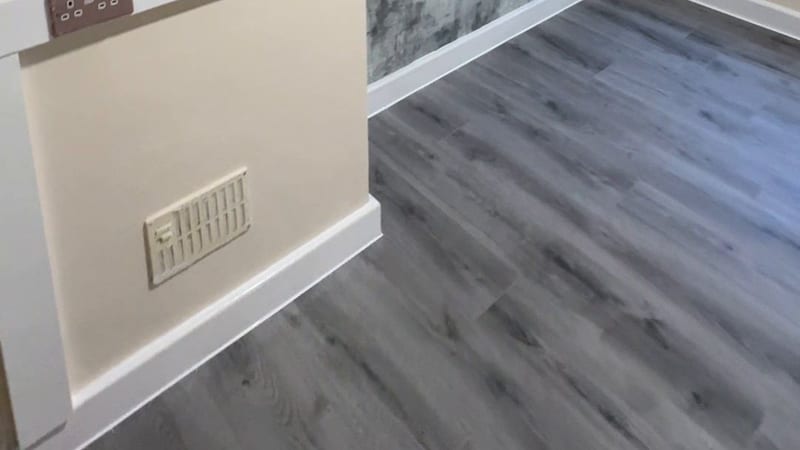
· 2 min read
Why is my laminate floor lifting or swelling?
Laminate lifts in a ridge when it has no room to expand, and it swells when water gets into its joints. The usual causes are a missing gap at the walls, spills or a leak, damp coming up from a concrete floor, or an uneven base. Boards that have only lifted can often be relaid; boards with swollen edges cannot be dried back and have to be replaced.
Read the answer →
· 2 min read
Why is my shower leaking through the ceiling below?
Most leaks from a shower into the room below come from four places: tired sealant where the tray meets the wall, cracked grout, a loose or failed waste under the tray, or the pipes and valve behind the wall. Stop using the shower, let the ceiling dry, and check the sealant and grout first: they are the most common cause and the simplest to put right.
Read the answer →