Advice from the team
Why is my paint peeling, flaking or bubbling?
The short answer
Paint peels, flakes or bubbles when it loses its grip on the surface underneath. The usual causes are damp or condensation, fresh plaster painted without a thinned mist coat, a dusty or greasy surface, or water-based paint put straight over old oil-based gloss. Find and fix the cause first, scrape back to sound paint, prepare the surface, then repaint, or the new coat will fail the same way.
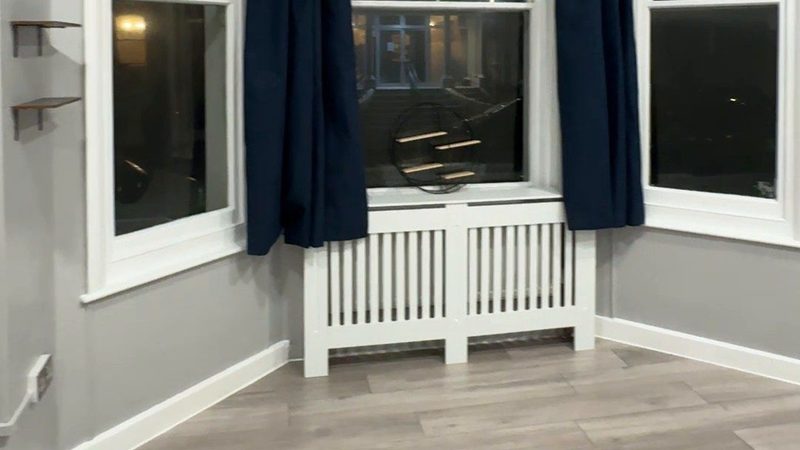
Peeling paint is one of the most common things we are shown when someone asks for a room to be redecorated. Painting straight over it rarely lasts: the new coat sits on top of paint that has already let go, and it comes away with it. Where the paint fails, and how it fails, usually tells you why.
1. Damp coming through the wall
Paint that bubbles or comes away in sheets low on a wall, around a window or under a bay often has water behind it. A white, powdery bloom on the plaster underneath is salt carried through by moisture. Look outside for the cause: a blocked or leaking gutter, a cracked downpipe, failed pointing or render, or a window sill that sends rain into the wall. Once the source is fixed, the wall must dry out fully before it is made good and painted.
2. Condensation in bathrooms and kitchens
Peeling on a bathroom or kitchen ceiling, often with black spots of mould, is usually condensation. Steam settles on the coldest surfaces and soaks the paint every day. Better ventilation is the real fix; after that, a paint made for bathrooms and kitchens copes far better than ordinary emulsion. Our guide to black mould on a bathroom ceiling goes through it step by step.
3. New plaster painted too soon, or without a mist coat
Fresh plaster is very thirsty. It needs to dry out completely first, and then a first coat of watered-down emulsion, the mist coat, has to soak in and seal it. Paint rolled straight onto new plaster, or a vinyl or wipeable emulsion used as the first coat, stays on the surface and later peels off in strips.
4. Water-based paint over old gloss
In older homes, woodwork, doors and sometimes walls were finished in oil-based gloss. Water-based paint put straight over it has nothing to grip, and it scratches or peels off with a fingernail. The old gloss needs cleaning, a light sand to give it a key, and a suitable primer before the new coat goes on.
5. Dirt, grease and dust
Kitchen walls, door frames, hallways and anywhere hands touch carry grease that stops paint sticking. Walls that were sanded and not dusted down do the same. A wash with sugar soap and a rinse with clean water is often all it takes.
6. Heat and cold
Paint on radiators, behind a cooker, or on a cold outside wall in winter can fail if the wrong paint was used, or if it was put on when the surface was too cold or too damp to dry properly.
A word on lead in older paint
Many houses and flats around Eastbourne are Victorian or Edwardian, and paint used in homes before the 1970s may contain lead. Government guidance says paint in good condition keeps the lead sealed in; the risk comes when it is sanded dry or burned off, which releases dust and fumes. If old paint is flaking in a period home, do not dry-sand it or take a blowtorch to it, and keep children away from the dust and flakes.
How peeling paint is put right
- Find and fix the cause first: the leak, the ventilation or the wrong paint underneath.
- Scrape off everything loose, back to paint that is firmly stuck.
- Feather the edges so they do not show through the new coat.
- Fill and sand any dents, then wash and dust the surface.
- Prime bare plaster, bare wood or old gloss with the right primer.
- Finish with two coats of paint suited to the room.
Most of a good redecoration is preparation, and preparation is what makes it last. Our painting and decorating service covers it from the scraping to the last coat.
Questions we get asked
Can I just paint over peeling paint?
Not for long. New paint is only as strong as the paint under it, so anything loose has to come off first, and the cause has to be fixed, or the peeling comes back.
Why is the paint peeling off my ceiling?
On a bathroom or kitchen ceiling it is usually condensation. On a ceiling under a bathroom or a roof, it can be a leak, so check above it. On new plaster, it is usually a missing mist coat.
Do you redecorate rooms with peeling paint near me?
Yes. We work in Eastbourne and about 20 km around it, from Seaford to Bexhill-on-Sea and Hailsham. Send photos on WhatsApp for a free fixed quote, or see the areas we cover.
More advice
· 2 min read
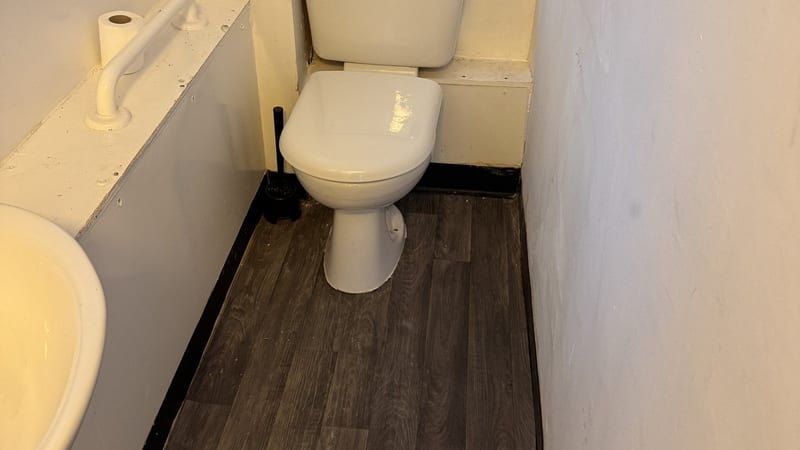
How can I make a bathroom safer for an older parent?
Start with the changes that prevent falls: grab rails by the toilet and in the shower, a non-slip floor, good lighting and a shower seat. If climbing into the bath is the problem, replacing it with a level-access or low-tray shower makes the biggest difference. Councils can help pay for some adaptations through a Disabled Facilities Grant, usually after an assessment by an occupational therapist.
Read the answer →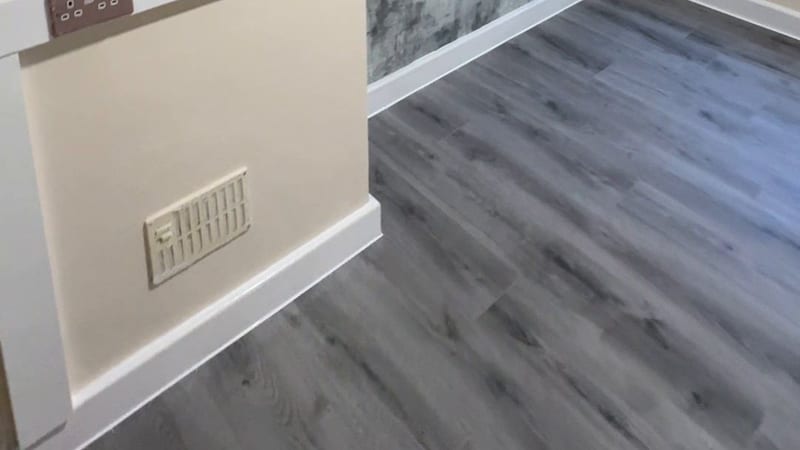
· 2 min read
Why is my laminate floor lifting or swelling?
Laminate lifts in a ridge when it has no room to expand, and it swells when water gets into its joints. The usual causes are a missing gap at the walls, spills or a leak, damp coming up from a concrete floor, or an uneven base. Boards that have only lifted can often be relaid; boards with swollen edges cannot be dried back and have to be replaced.
Read the answer →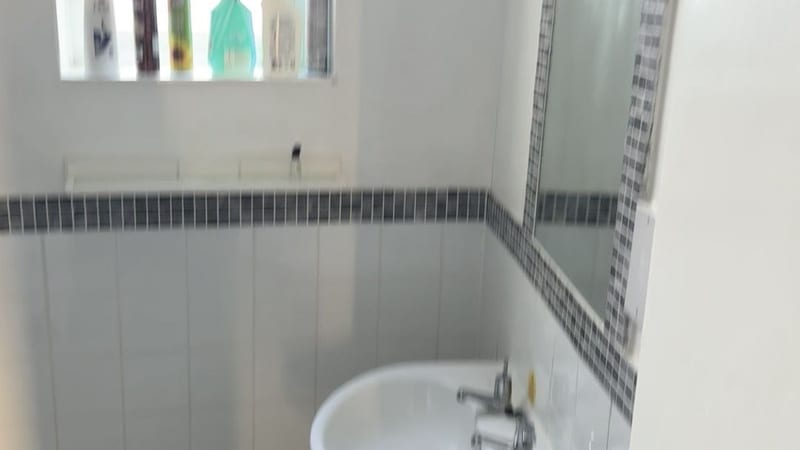
· 2 min read
Why is my shower leaking through the ceiling below?
Most leaks from a shower into the room below come from four places: tired sealant where the tray meets the wall, cracked grout, a loose or failed waste under the tray, or the pipes and valve behind the wall. Stop using the shower, let the ceiling dry, and check the sealant and grout first: they are the most common cause and the simplest to put right.
Read the answer →