Advice from the team
How do I get a holiday let ready for the new season?
The short answer
Walk round the property in the quiet months as if you were a guest, and list everything that looks worn or does not work properly. Fix the faults first, then refresh what guests notice most: bathrooms, walls, floors and doors. Book the work between November and March so it is finished before Easter, and keep the safety checks up to date.
Along the coast from Seaford to Bexhill, holiday lets get their heaviest use in the warmer months. The quiet months are the time to put right a season of wear without cancelling bookings. This is the plan we suggest to owners.
1. Walk round it like a guest
Start at the front door and go room by room with your phone. Photograph anything a guest would notice: marks on walls, chipped paint on doors and skirting, stained grout, loose handles, a shower that drips, a blind that sticks. Read your recent reviews too: guests often point out small faults that the owner no longer sees.
2. Fix the faults before the looks
- Dripping taps, running toilets and showers that drip or will not stay at one temperature.
- Doors that stick, catches that do not latch, and wobbly handles and towel rails.
- Split or black silicone around baths, showers and kitchen worktops.
- Anything loose, broken or held together with tape.
3. Refresh what guests notice most
Bathrooms come first: guests see them in the photos and mention them in reviews. New grout and sealant, or wall panels over old tiles, can make a tired shower look new in a day or two.
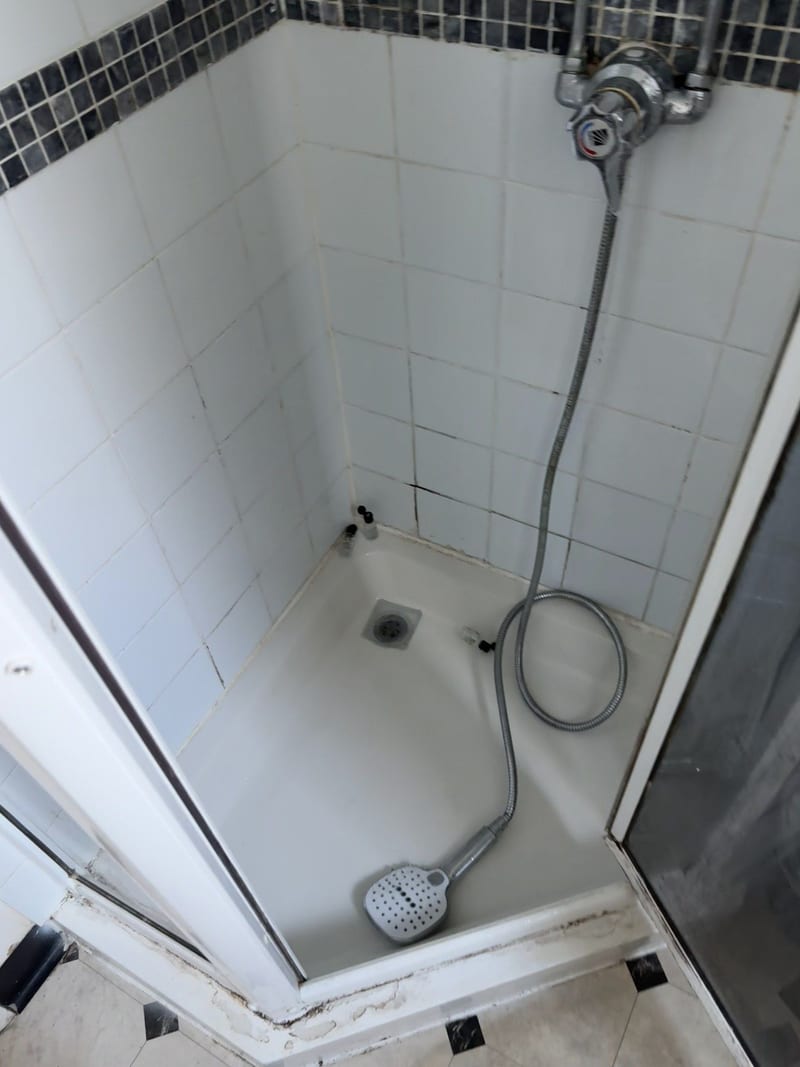
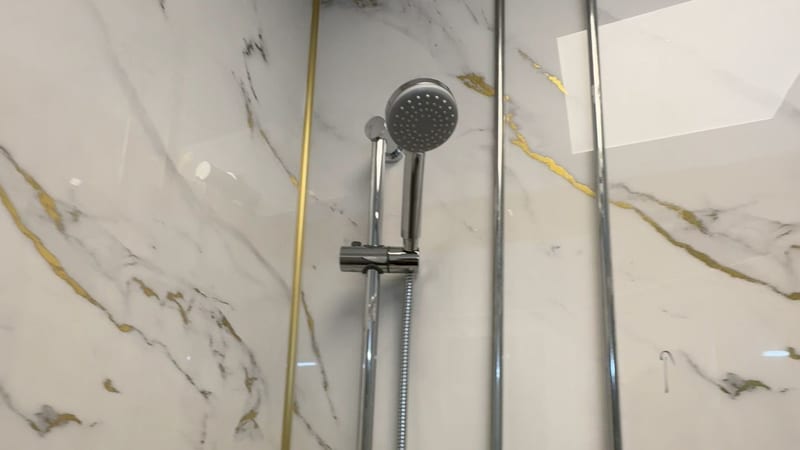
This shower in Eastbourne had stained grout that would not come clean. It is shown at the top of this page after it was lined with marble-effect wall panels and gold trim.
Then repaint walls and woodwork in a paint that can be wiped clean between guests, and replace worn flooring in halls and bathrooms with something waterproof and hard-wearing, such as LVT.
4. Keep the safety checks in date
The yearly gas safety check applies to holiday lets as it does to other lets, and government fire-safety guidance covers small paying-guest accommodation. A national registration scheme for short-term lets in England is also expected. Gas and electrical work is done by qualified engineers: when a job needs one, we bring them in and coordinate the work.
5. Book it for the quiet months
November to March is the natural window: the work is finished before the Easter bookings start. Block the dates in your calendar early, and leave a few spare days for paint to dry and for the clean before the first guests.
You do not need to be there
Many owners do not live nearby. We can collect keys from a key safe or your manager, work while the property is empty, and send photos as each job is done, with a fixed price agreed first.
Questions we get asked
Can small repairs be done between guests?
Often, yes. A loose handle, a running toilet or a scuffed wall can usually be sorted between check-out and check-in. Send a photo and your changeover times on WhatsApp.
What paint is best for a holiday let?
A good washable or scrubbable emulsion on walls and a hard-wearing satin or eggshell on woodwork. Both can be wiped clean between guests, so small marks do not mean repainting.
Do you look after holiday lets in Pevensey Bay and Seaford?
Yes. We work in Eastbourne and up to 20 km around it, including Pevensey Bay, Seaford, Bexhill and the villages of the South Downs. See the areas we cover.
More on our holiday lets page, or send a photo on WhatsApp for a free fixed quote.
More advice
· 2 min read
How can I make a bathroom safer for an older parent?
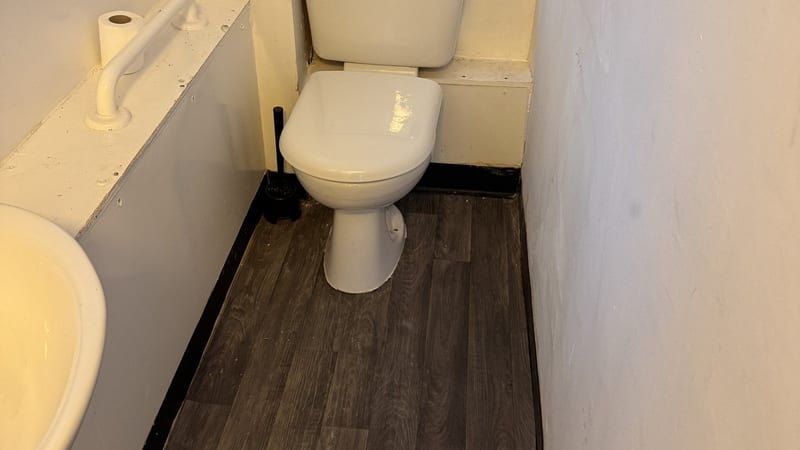
Start with the changes that prevent falls: grab rails by the toilet and in the shower, a non-slip floor, good lighting and a shower seat. If climbing into the bath is the problem, replacing it with a level-access or low-tray shower makes the biggest difference. Councils can help pay for some adaptations through a Disabled Facilities Grant, usually after an assessment by an occupational therapist.
Read the answer →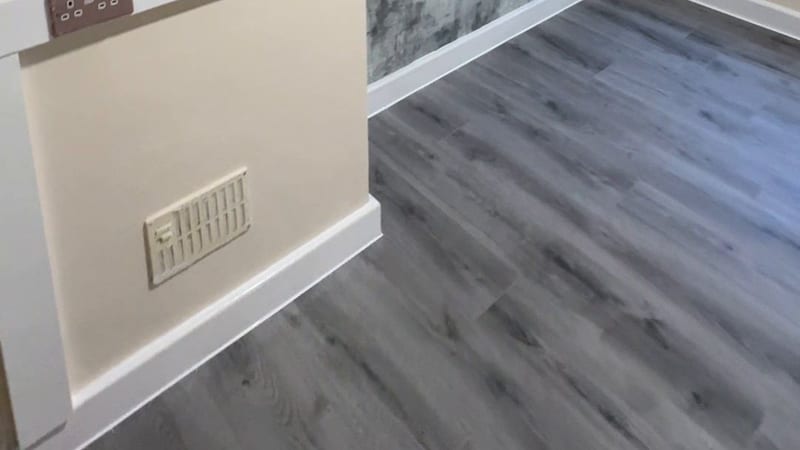
· 2 min read
Why is my laminate floor lifting or swelling?
Laminate lifts in a ridge when it has no room to expand, and it swells when water gets into its joints. The usual causes are a missing gap at the walls, spills or a leak, damp coming up from a concrete floor, or an uneven base. Boards that have only lifted can often be relaid; boards with swollen edges cannot be dried back and have to be replaced.
Read the answer →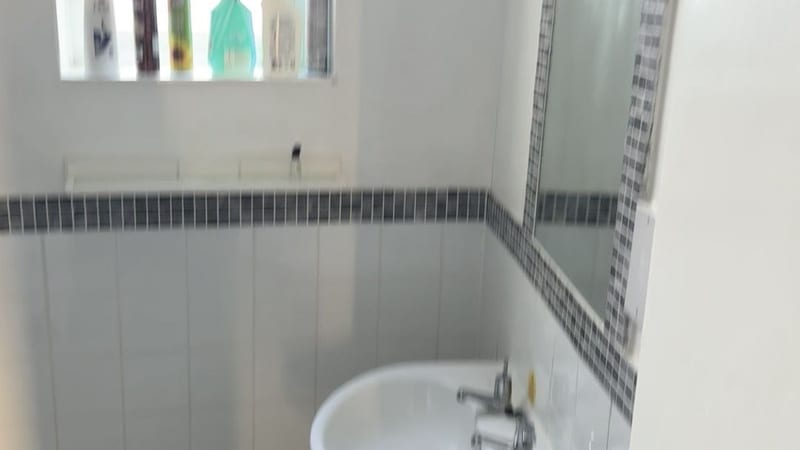
· 2 min read
Why is my shower leaking through the ceiling below?
Most leaks from a shower into the room below come from four places: tired sealant where the tray meets the wall, cracked grout, a loose or failed waste under the tray, or the pipes and valve behind the wall. Stop using the shower, let the ceiling dry, and check the sealant and grout first: they are the most common cause and the simplest to put right.
Read the answer →